
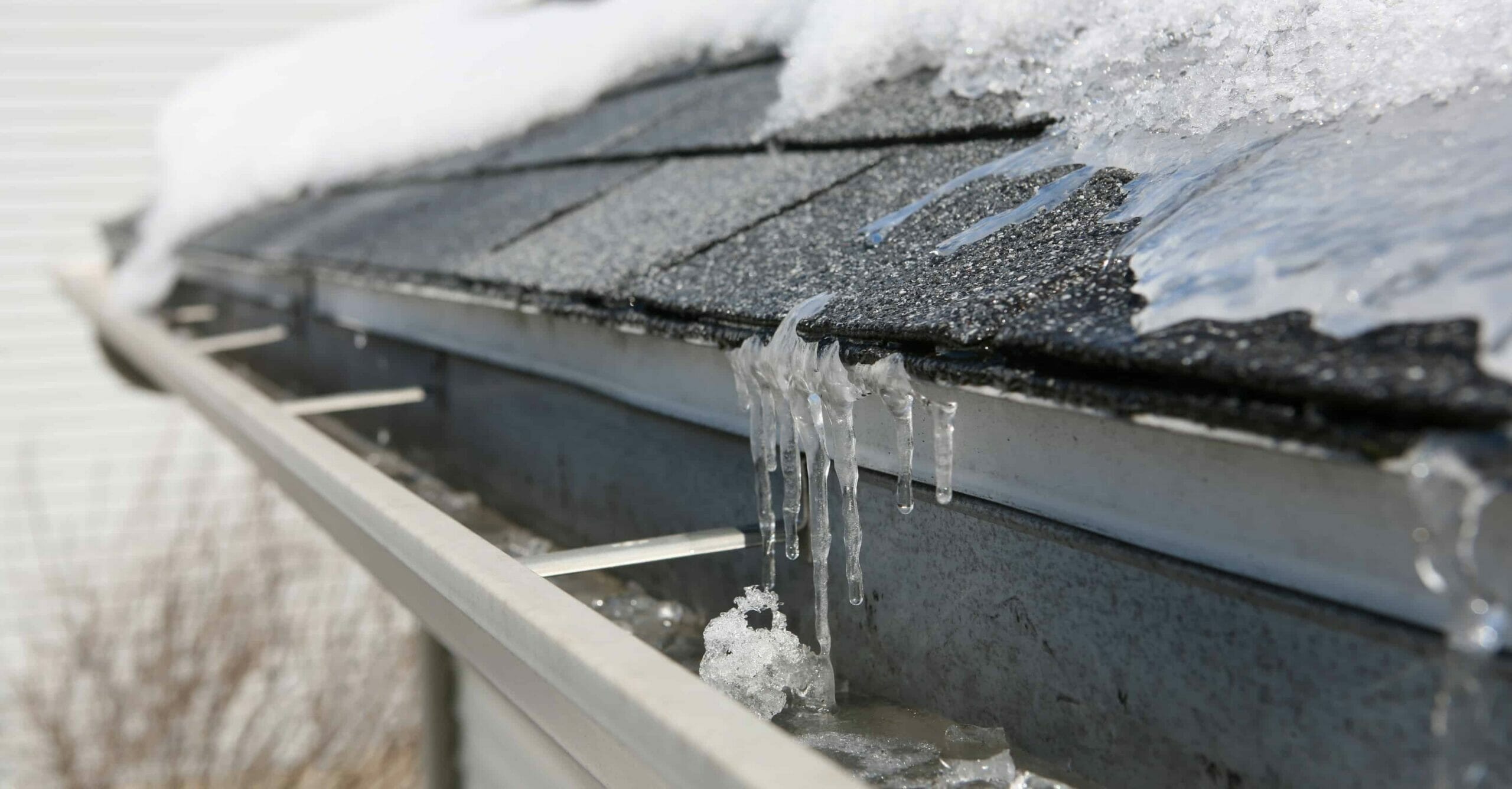
Yes. A Denver roof should be inspected before winter, ideally in September or early October. The National Weather Service puts Denver’s average first measurable snowfall around October 19 and the last around April 28, which means your roof spends six months taking snow, ice and repeated melting. A fall inspection finds lifted shingles, cracked pipe boots, loose flashing and clogged gutters while they are still small, dry-weather repairs.
Why winter is hard on Denver roofs
- Snow, then sun. The NWS lists Denver’s average seasonal snowfall at 56.9 inches, and much of it melts off within days. Every melt sends water across the same weak spots.
- Ice dams. Heat escaping from the attic melts snow higher on the roof, and the water refreezes at the cold eaves. The ice holds back meltwater that can work under shingles. Denver does not require an ice barrier at the eaves, so many homes do not have one; see whether Denver roofs need ice and water shield.
- Weight. Denver’s roofing guide lists a 35 pounds per square foot ground snow load. A sound roof carries it. Rotted decking or damaged framing may not.
- Wind. Shingles that lost their seal in a summer storm can let go in the next strong wind.

What a pre-winter inspection covers
| Area | What we check | Why it matters in winter |
|---|---|---|
| Shingles | Lifted tabs, creases, missing pieces, hail bruising | Wind and snowmelt find any gap |
| Flashing | Chimney, wall and skylight flashing; kick-outs at wall ends | Most winter leaks start here |
| Penetrations | Pipe boots, vents, B-vent storm collars | Sun-cracked rubber leaks under melting snow |
| Eaves | Drip edge, signs of past ice dams, rotted fascia | Where ice dams form |
| Gutters | Debris, sag, pitch, downspouts that drain away from the house | Full gutters freeze solid and push ice back under the roof edge |
| Attic | Insulation depth, frost, damp spots, ventilation | Warm attics cause ice dams |
| Low-slope areas | Drains, ponding, open seams on porches and additions | Standing water freezes and opens seams |
You get photos of everything we see, a plain answer on whether anything needs work before snow, and a written price for any repair.
What to fix before the first storm, and what can wait
Fix before snow: anything that lets water in (missing shingles, open flashing, cracked boots), gutters that are pulling away, and attic bypasses that leak heat. Can usually wait for spring: cosmetic granule loss, a faded ridge cap, or a replacement decision on an aging but dry roof. In Denver, a repair larger than 10 percent of the roof or two squares, whichever is smaller, needs a permit, so a bigger fix takes more lead time.
For the problems that do show up mid-winter, see common winter roof problems, and for the best weather to schedule repair work, read the best time for roof repairs in Colorado. If you want a year-round routine rather than a one-time check, our guide to regular roof inspections explains how often to look and what to look for between visits.
Integrity Roofing and Painting is veteran-owned and family-run since 1990, with a Denver-area office in Centennial and 650+ Google reviews. Call (303) 209-0152 or book a free Denver roof inspection; we reach out the same business day. If we find damage, our Denver roof repair team can usually fix it before the weather turns.
Sources: NWS Boulder, Denver fall and winter statistics; City and County of Denver, Roofing Guide and Checklist (updated 4/11/2024).
