
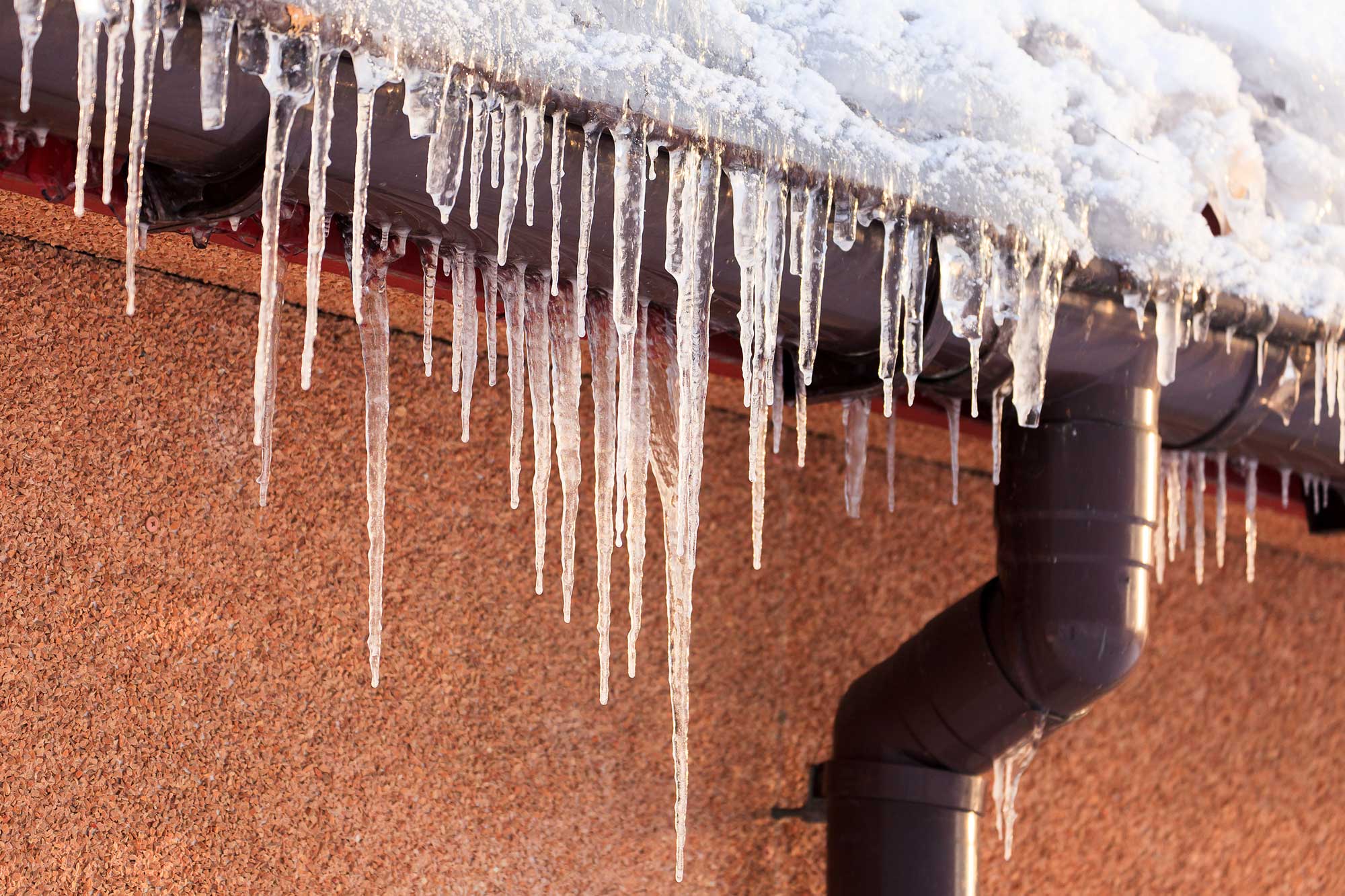
What causes ice dams on your roof is heat escaping from the house into the attic, and you stop them for good by keeping that heat in. Warm air leaking through ceiling lights, hatches and plumbing chases, plus thin insulation, warms the roof deck, so snow melts up high and refreezes at the cold eave. The ice ridge holds back more meltwater, which backs up under the shingles. Seal the air leaks, add insulation and balance attic ventilation; an ice barrier at the eaves protects against leaks while you do.
How an ice dam forms
- Heat leaks into the attic and warms the underside of the roof.
- Snow on the warm part of the roof melts, even when it is below freezing outside.
- Meltwater runs down to the overhang, which sits over the cold outside air, and freezes.
- The ice grows into a dam. Water pools behind it and works under the shingles, into the deck, the wall and the ceiling.
The result is stained ceilings near outside walls, wet insulation, peeling paint, and gutters pulled down by the ice.
Find where the heat is escaping
- On a snowy day, look at the roof from the street. Bare patches or melted stripes above certain rooms show where heat is leaking.
- In the attic: look for dark, dirty insulation (air has been moving through it), gaps around light fixtures, bath fans, chimneys and plumbing stacks, and frost on nail tips.
- Bath and kitchen fans must vent outside, not into the attic.
- Check insulation depth. Thin or patchy insulation lets the ceiling warm the attic.
Clear an ice dam safely today
- Use a roof rake from the ground to pull the bottom few feet of snow off after a storm. Leave a little snow so you do not scrape the shingles.
- Do not chip the ice with a hammer, axe or shovel. It breaks shingles and gutters.
- Do not climb a ladder against an icy gutter. Our roof safety guide explains ladder rules; ice makes them all harder.
- If water is coming in, call for help. Steam removal by a professional melts the ice without damaging the roof.
The permanent fixes
| Fix | What it does | When it happens |
|---|---|---|
| Air sealing at the ceiling | Stops warm air reaching the attic | Any time; the biggest single fix |
| More attic insulation | Keeps the ceiling’s heat in the house | Any time |
| Soffit intake and ridge exhaust | Keeps the roof deck cold and even | Best during a reroof |
| Ice barrier at the eaves | Stops backed-up water from leaking in | At replacement; required in PPRBD’s area above 7,000 feet |
| Gutters that drain | Lets meltwater leave the roof | Fall cleaning; repair sagging runs |
PPRBD’s reroof guidelines say a home above 7,000 feet must have an ice barrier of two cemented layers of underlayment or a self-adhering polymer-modified bitumen sheet, from the eave to at least 24 inches inside the exterior wall. The elevation is printed on the permit receipt. Even below that line, an ice barrier at the eaves and valleys is cheap protection during a replacement.
If ice has damaged gutters, read repair or replace your gutters. If years of moisture have softened the deck or rafters, see structural roof problems. Getting ready for winter? Use our fall roof checklist for Colorado Springs. For repairs after snow and ice, see snow and ice roof repair in Colorado Springs.
Get the cause found
Integrity Roofing and Painting is veteran-owned and has been family-run since 1990. We are an Owens Corning Platinum Preferred contractor with 650+ Google reviews, and our inspections include the attic, not just the shingles. Call (719) 488-2800 or book a free Colorado Springs roof inspection; we reach out the same business day.
Sources: Pikes Peak Regional Building Department, Reroofing Guidelines (rev. 03/05/2024: ice barrier above 7,000 feet).
