
The most common winter roof problems in Denver are ice dams at the eaves, leaks at flashing and pipe boots during snowmelt, clogged and frozen drains on flat or low-slope sections, wind-lifted shingles, damage from shoveling or picking at ice, and holes from holiday-light fasteners. Most can be stopped with a simple stopgap until a dry day, and most have a permanent fix that costs far less than the water damage they cause.

Six winter problems and the right fix
| Problem | Stopgap until a dry day | Lasting fix |
|---|---|---|
| Ice dams at the eaves | Roof rake from the ground; catch drips inside | Air sealing and insulation in the attic, balanced ventilation, a membrane at the eaves when the roof is next replaced |
| Flashing leaks at chimneys, walls, skylights | Towels and a bucket; note when it leaks | New step, counter or chimney flashing; kick-outs where wall flashing ends |
| Cracked pipe boots and B-vent collars | None safe from the roof in snow | Replace boots; storm collar on furnace and water heater vents |
| Clogged, frozen low-slope drains | Clear debris from the drain only if it is safe to reach | Clean drains and scuppers each fall; repair open seams |
| Wind-lifted or missing shingles | Tarp if underlayment is exposed | Replace and hand-seal the shingles |
| Shovel, ice-pick or light-clip damage | Do not keep chipping | Replace damaged shingles and gutters |
Ice dams, the Denver winter classic
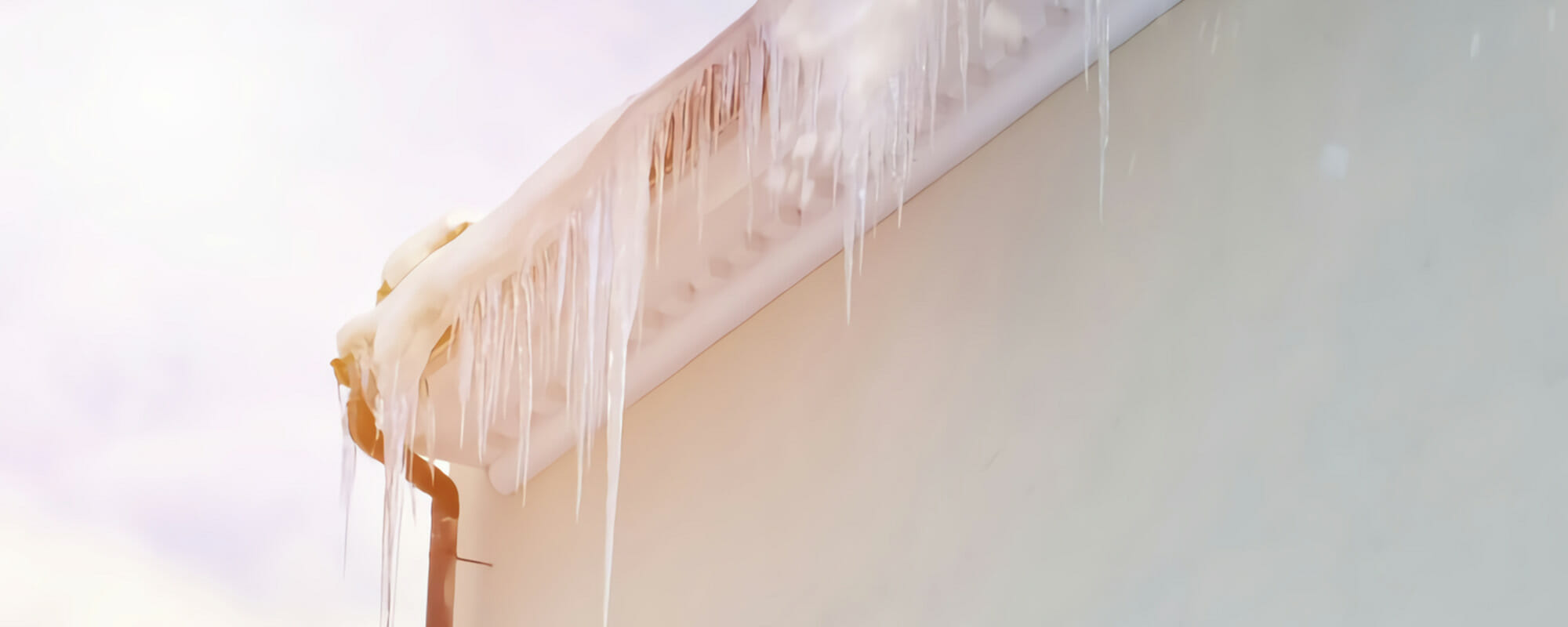
Snow on a warm attic roof melts, runs down to the cold overhang and refreezes. The ice builds into a ridge that holds back the next melt, and that water works under the shingles. Denver’s code does not require an ice barrier membrane at the eaves, so many Denver homes rely on shingles alone at the very spot ice dams form. Our explainer on whether Denver roofs need ice and water shield covers the membrane, and our ice dam guide explains the attic side.
Flashing and boots: the snowmelt leaks
Denver’s roofing checklist requires flashing at every wall and roof intersection, change in slope and roof opening, step flashing counterflashed at walls, kick-outs at the bottom of wall flashing, and a storm collar on B-vent pipes. Older homes often miss one of these, and winter is when it shows. Existing flashing that is rusted or damaged must be replaced, not reused, when the roof is redone.
Flat and low-slope sections
Porches, additions and garages often have low-slope roofs with drains or scuppers. In Denver, those roofs must drain at each low point, and where parapets trap water, secondary overflow drains or scuppers are required. Leaves and needles clog the primary drain, the water freezes, and melt has nowhere to go. Low-slope roofs work differently from shingles; how home and commercial roofing differ explains why. Building owners can plan fall drain cleaning and spring checks with our commercial roof maintenance program guide.
Prevent the call
- Book a pre-winter roof inspection in September or October.
- Clean gutters, valleys and drains after the leaves fall. If your gutters sag or leak at the joints every winter, compare seamless and sectional gutters.
- Hang lights with clips, never nails.
- Leave the snow alone unless it is a real structural concern.
If a repair can wait, the best time for roof repairs in Denver explains how we pick the day. A repair larger than 10 percent of the roof or two squares, whichever is smaller, needs a Denver permit.
Integrity Roofing and Painting is veteran-owned and family-run since 1990, an Owens Corning Platinum Preferred contractor with 650+ Google reviews and a Denver-area office in Centennial. Call (303) 209-0152 for Denver roof repair, or book a free inspection. We respond the same business day.
Sources: City and County of Denver, Roofing Guide and Checklist (updated 4/11/2024).
Photos From Our Projects

