
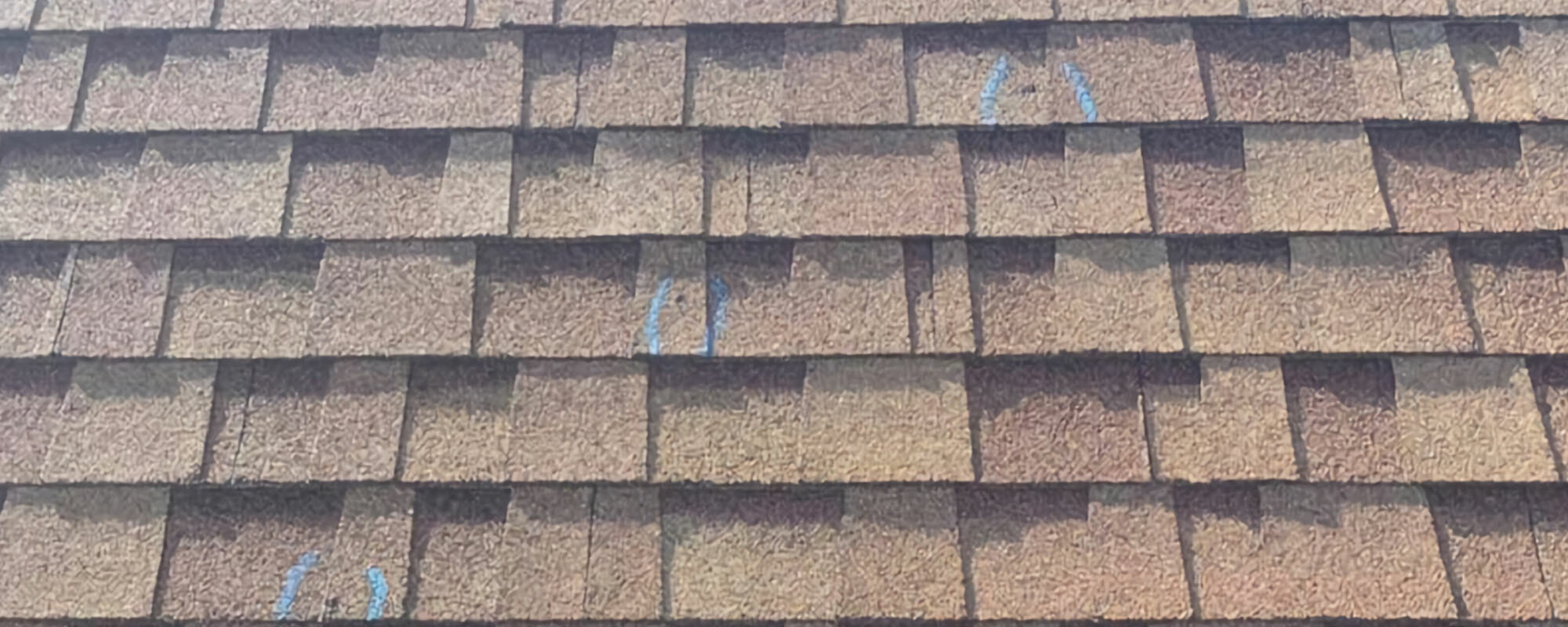
Composition shingles are asphalt shingles: a fiberglass mat saturated and coated with asphalt and surfaced with mineral granules. They come as 3-tab (one flat layer) or architectural, which estimates call laminated. They are the roof we see most often on Colorado Springs homes. Damage shows up as missing, cracked, curled or brittle shingles, hail bruises, granule loss and tree impacts. You can spot most of it from the ground or the attic; leave the roof itself to a professional.
What is in a composition shingle
| Layer | Job |
|---|---|
| Fiberglass mat | The core that gives the shingle strength. Older organic (felt) mats are no longer standard. |
| Asphalt | Waterproofing. In SBS modified shingles, a rubber-like polymer is blended in for flexibility. |
| Granules | Protect the asphalt from UV and give the color. |
| Sealant strip | Bonds each shingle to the one above once the sun warms it. |
Types you will see: 3-tab, architectural or laminated, designer or luxury (heavier, shake or slate look) and impact-resistant Class 4. Our 3-tab vs architectural comparison and Owens Corning shingles we install cover the differences.
Eight signs of damage, and what each means

- Missing shingles. Wind or failed sealant. Exposed underlayment can leak in the next storm.
- Hail damage. Dark spots where granules were knocked off, soft bruises, cracks in the mat. The worst often sits on the slopes facing the storm.
- Brittle shingles. Age and sun. Brittle shingles crack when walked on and are hard to repair.
- Tree damage. Punctures or gouges from limbs. Check the deck underneath too.
- Minor heat cracks. Fine surface crazing from age.
- Major cracks and splits. Through the mat; water can get in.
- Curling or cupping. Edges lifting or the middle sinking. Often an attic ventilation problem, sometimes age.
- Manufacturing defects. Blistering or premature granule loss across a whole roof, early in its life. Keep your warranty paperwork.
What you can safely check from the ground
- Walk the house with binoculars and look for missing pieces, lifted edges and dark patches.
- Look at downspout outlets for heaps of granules, especially after a storm.
- Check gutters, vents and window wraps for fresh dents; soft metals show hail first.
- In the attic, look for daylight, stains or damp insulation after rain.
- Photograph everything with the date.
Do not climb onto a damaged roof. Damaged shingles can slide, loose granules are slippery, and a roof is a long way down.
Repair or replace?
A few missing or cracked shingles on an otherwise sound roof are a repair. Widespread hail bruising, brittleness or curling usually means replacement. In PPRBD’s area, a repair over 100 square feet needs a permit, and a reroof requires removing all existing layers before new asphalt shingles go on. If you are weighing an upgrade, read is a Class 4 shingle worth it?; low-slope sections have their own limits, covered in planning your roof’s slope. Choosing colors for a Texas home? See Austin roof colors.
If the damage came from a storm, the claim stays yours. We document the damage with photos and make sure nothing gets missed in the scope. Start with what to do after storm damage.
Get a professional look
Integrity Roofing and Painting is veteran-owned and family-run since 1990, an Owens Corning Platinum Preferred contractor with 650+ Google reviews. A free inspection includes the attic, roof, flashing and gutters, with photos of anything we find. Call (719) 488-2800 or book a free Colorado Springs roof inspection; we reach out the same business day. For repairs, see Colorado Springs roof repair.
Sources: Pikes Peak Regional Building Department, Reroofing Guidelines (rev. 03/05/2024).
