
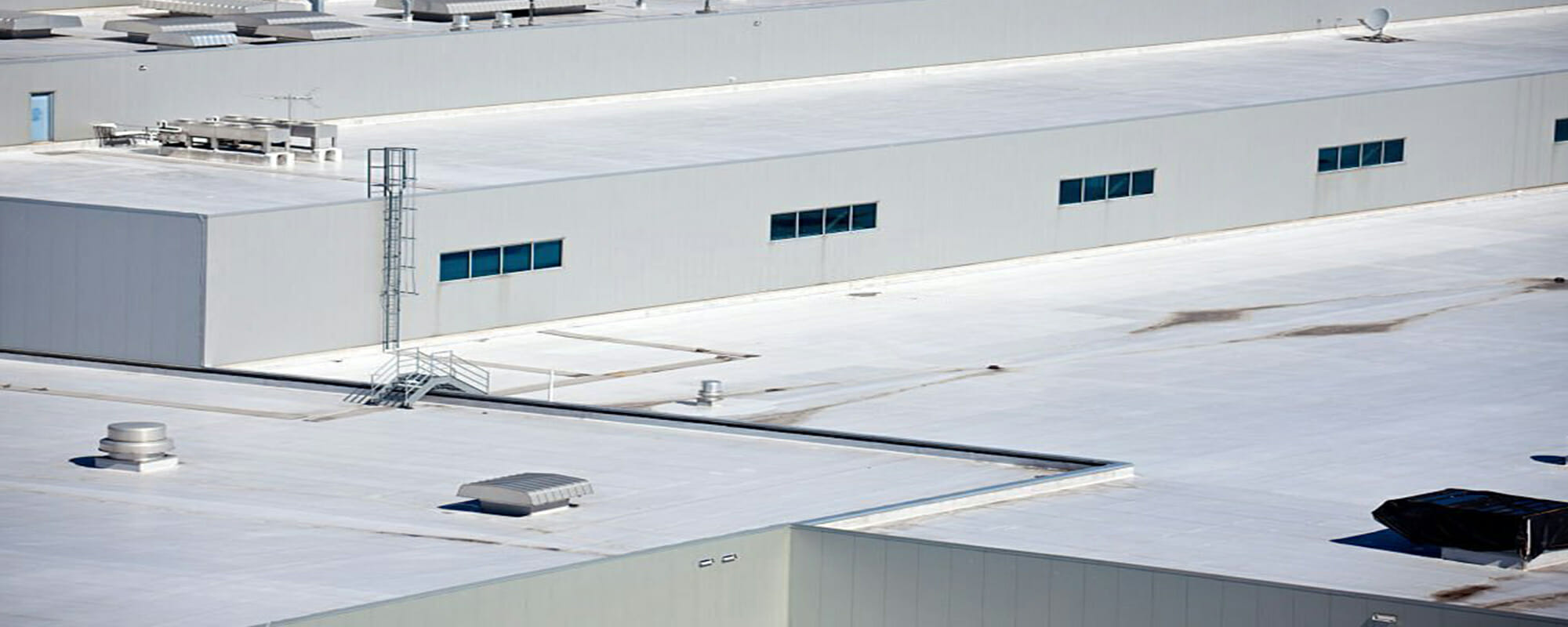
Home roofing and commercial roofing in Denver are different mainly in slope. Most homes have steep roofs covered with shingles, tile or metal that shed water by gravity, and design and curb appeal drive the material choice. Most commercial buildings have low-slope roofs covered with continuous membranes such as TPO, EPDM or modified bitumen, where drains, scuppers and rooftop equipment drive the design. The two also need different Denver contractor licenses, follow different drainage rules and get different inspections.
Side by side
| Home (steep-slope) | Commercial (low-slope) | |
|---|---|---|
| How it keeps water out | Overlapping shingles, tile or metal shed water downhill | A continuous membrane holds water until it reaches a drain |
| Common materials | Asphalt shingles, metal, tile, slate | TPO, EPDM, modified bitumen, metal panels |
| Denver license | D-Roof Shingles | D-Roof Covering/Waterproofing for membranes |
| Drainage | Gutters and downspouts | Slope to drains at each low point; overflow drains or scuppers where parapets trap water |
| Minimum slope | Asphalt shingles 2:12 or steeper | Modified bitumen, EPDM and TPO designed for at least 1/4 inch per foot |
| Denver inspections (reroof) | Final; mid-roof only if needed | Pre-inspection and final |
| What matters most | Look, wind rating, hail resistance | Drainage, seams, rooftop equipment, energy |
What Denver’s code says about each
Homes. Denver requires asphalt shingles to be wind-rated by zone: 115 mph east of Federal Boulevard, 125 mph between Federal and Sheridan, and 140 mph between Sheridan and Kipling. Flashing, kick-outs and drip edge are on the inspector’s checklist. If you are reroofing a house, see Denver residential roofing.
Commercial and low-slope roofs. Membranes need a D-Roof Covering/Waterproofing licensee. Roofs that do not drain over their edges need drains at each low point, and where parapets trap water, secondary overflow drains or scuppers sized like the primary drains and set 2 inches higher; emergency scuppers need at least a 4-inch opening. Rooftop equipment must sit on 8-inch legs or curbs bearing on the deck, not on pads. For buildings of 25,000 square feet or more, Denver’s Green Buildings Ordinance lowers the repair permit threshold to 5 percent of the roof or two squares, and quick permits are not available.

Where homes and commercial roofs overlap
Plenty of Denver houses have both: a shingle main roof and a flat roof over a garage, porch or addition. That flat section follows the commercial-style rules above and fails the commercial way, at clogged drains and open seams, especially in winter; common winter roof problems covers frozen drains. Regular checks matter more on low-slope areas than anywhere else on a house; see how often to have a Denver roof inspected. For a material-by-material look at steep-slope options in this climate, read which roofing materials hold up in Colorado.
Cost and repair differences
Commercial roofs are usually larger and involve more detail work around equipment, drains and parapets, so they are priced and scheduled differently from homes. Repairs differ too: a shingle repair replaces pieces, while a membrane repair patches or re-seams the membrane and corrects the drainage that caused it.
Integrity Roofing and Painting is veteran-owned and family-run since 1990, an Owens Corning Platinum Preferred contractor with 650+ Google reviews and a Denver-area office in Centennial. For businesses, see Denver commercial roofing. Call (303) 209-0152 or book a free inspection; we respond the same business day.
Sources: City and County of Denver, Roofing Guide and Checklist (updated 4/11/2024); U.S. DOE, Consumer Guide to Cool Roofs.
Photos From Our Projects


