
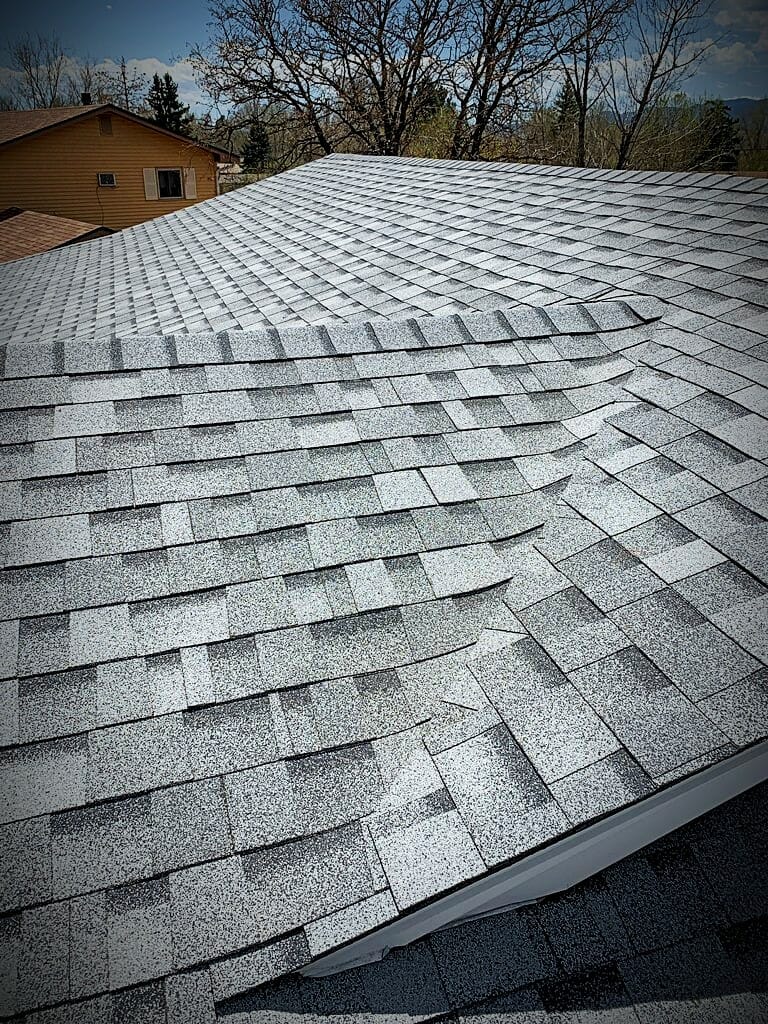
Attic ventilation is the flow of outside air in through low vents at the eaves and out through high vents near the ridge, so heat and moisture leave the attic instead of building up under the roof. It matters because a poorly vented attic in Colorado causes ice dams and frost in winter, a hot upstairs and baked shingles in summer, and moisture that rots decking and soaks insulation. Shingle manufacturers also expect a ventilated attic, so poor ventilation can put a warranty at risk. In Colorado Springs, with about 32 inches of snow a season and July highs in the upper 80s, a roof sees both problems every year.
Six signs your attic ventilation is not working
| Sign | Where you see it | What it usually means |
|---|---|---|
| Frost or water drops on nail tips | Attic, on a cold morning | Warm moist air reaching the deck; too little exhaust or too many air leaks |
| Ice dams and icicles at the eaves | Gutters and overhangs after snow | Heat escaping into the attic and melting snow above the living space |
| Upstairs rooms much hotter than downstairs | Bedrooms in summer | Attic heat soaking through the ceiling |
| Dark staining or mold on the deck underside | Attic, near the eaves or the ridge | Long-term condensation |
| Curling or blistering shingles, mostly on one roof | Roof surface | Deck running hot from below |
| Compressed or damp insulation | Attic floor | Moisture dripping from above, or insulation blocking soffit vents |
If you see two or more, ask for an attic check at your next inspection. We look at the attic on every free inspection because that is where ventilation problems show first.

How ventilation works in a Colorado winter and summer
Winter. Your house makes moisture from showers, cooking and breathing. Some of it rises through ceiling gaps into the attic. A well-vented attic stays close to outdoor temperature and carries that moisture out. A poorly vented one lets it condense on the cold deck, and lets house heat melt snow that refreezes at the eaves. Ice and water shield stops the leak; ventilation and air sealing stop the ice dam. Gutter guards that hold snow at the eave can make icicles worse; see are gutter guards worth it. See do Denver roofs need ice and water shield.
Summer. Colorado sun heats the roof deck fast at altitude. Without exhaust, attic air gets far hotter than outdoors, the upstairs warms, the air conditioner works harder, and the shingles age from below. Roof color plays a smaller part; see does roof color matter in Denver’s climate.
Active vs passive ventilation
- Passive systems use soffit or eave intake and ridge, box or turbine exhaust. Warm air rises and wind helps it out.
- Active systems use powered fans. They need enough intake, or they pull air from the living space.
Both work when intake and exhaust are balanced. Mixing exhaust types on one roof, such as a ridge vent and a powered fan, can short-circuit the airflow.
What to fix when you replace the roof
A reroof is the cheapest time to correct ventilation because the ridge and eaves are already open. We check net free area, open or add soffit intake, install baffles where insulation blocks the eaves, and size ridge or other exhaust to match. The math is on how to size roof ventilation. Switching from cedar shakes changes the attic too; see ventilation changes when replacing cedar with asphalt. Put the plan in writing as part of what to finalize before your install.
Integrity Roofing and Painting is veteran-owned and family-run since 1990, an Owens Corning Platinum Preferred contractor with 650+ Google reviews. Call (719) 488-2800, book a free Colorado Springs roof inspection, or see roof repair in Colorado Springs.
Sources: National Weather Service Pueblo, Colorado Springs normals and records (1991 to 2020: 32.5 in seasonal snowfall, 86.5 degree July normal high); City and County of Denver, Roofing Guide and Checklist (venting on reroofs); Owens Corning, Proper Attic Insulation (balanced intake and exhaust).
