
Key numbers
103 verified hail storms with stones of 1.5 inches or larger reached El Paso County, which includes Colorado Springs, from 2000 to 2025 in the storm records we keep; the largest measured 4.5 inches (softball size) on July 13, 2011 (NOAA NCEI).
| Hail storms by decade, 2000 to 2025 | 2000s: 35, 2010s: 44, 2020s: 24 Source: Storm library: El Paso County hail history |
|---|---|
| Largest hail | 4.5 in. (softball), July 13, 2011 Source: NOAA NCEI |
| Costliest hail storm | $352.8 million insured losses (2016 dollars), July 28, 2016 Source: RMIIA |
| 268 | NOAA's Storm Events Database logged 268 hail reports in Colorado in 2021, including 17 of 2 inches or larger. Source: NOAA National Centers for Environmental Information (NCEI), 2021 |
| About 3.5 million | About 3.5 million U.S. households reported missing roofing material, 1.9 million a sagging roof and 1.5 million a hole in the roof in the 2023 American Housing Survey. Source: Roofing Contractor (reporting Instant Roofer analysis of 2023 AHS), 2023 |
| $1153.7 million | NOAA lists 'Colorado Hail Storms (June 2004)' (2004-06-08 to 2004-06-09) among billion-dollar disasters affecting Colorado, at $1153.7 million CPI-adjusted ($695 million unadjusted). Source: NOAA National Centers for Environmental Information (NCEI), 2004 |
A storm counts when the library lists El Paso County among the areas it hit. Each hail size is the storm's largest report, which may have fallen in a neighboring county, and insured losses cover every area the storm hit.
Choose a roofer for hail damage in Colorado Springs the same way a building inspector would check them: confirm the company holds a Pikes Peak Regional Building Department (PPRBD) license, that it will pull the permit in its own name, that its written contract includes everything Colorado law requires, and that it documents the hail damage with photos before it talks price. A local office, real reviews and a plain answer when there is no damage matter more than the lowest bid.
The 7-point checklist
- PPRBD license. Look the company up under Search Contractors on pprbd.org, or call PPRBD at 719-327-2880 and ask. PPRBD’s reroof guidelines say it is a code violation to contract or perform a reroof or repair over 100 square feet without a license, unless you own the home and it is your primary residence.
- The permit is theirs. Any repair or replacement over 100 square feet needs a PPRBD permit. The contractor who pulls it is the one who schedules the inspection; PPRBD does not let a homeowner request an inspection for their contractor. PPRBD tells homeowners never to pull a homeowner permit for a contractor, and you can confirm the permit was issued under Search Permits on its website.
- A complete written contract. Colorado’s roofing contract law (C.R.S. 6-22-103) requires the scope, the approximate dates and cost, the roofer’s physical address and contact details, its liability insurer and surety if any, and the cancellation and deposit refund terms, signed before work starts.
- No deductible games. The contract must also state that the roofer cannot pay, waive or rebate your insurance deductible. If someone offers to “take care of” it, walk away; our guide to Colorado’s deductible law explains why.
- Photo documentation. Ask to see photos of each hit on the shingles, vents and flashing. A roofer who climbs up and comes back with only a price is guessing.
- They know the local rules. In the Pikes Peak region every old layer comes off before new shingles go on, drip edge goes on the eaves and rakes, homes inside the City of Colorado Springs need a Class A roof covering, and properties above 7,000 feet need an ice barrier at the eaves. Our summary of the Colorado Springs roofing codes covers the rest.
- Still here next year. Look for a physical office, a local phone number and reviews written over several seasons, not just the last few weeks.
Questions to ask before you sign
- How many layers are on my roof now, and is the deck sound? A core sample or a lifted shingle answers this.
- Which shingle, underlayment and starter strip are in the price? Get product names, not “architectural shingle”.
- Who will be on site, and who do I call if something goes wrong after the job?
- If the roof only needs a repair, will you tell me? You want a roofer willing to say so.
Warning signs after a storm
- Pressure to sign the same day, or a contract with blank price or scope lines.
- Payment in full before materials arrive. Colorado law requires a roofer to hold your payment in trust until materials are delivered or most of the work is done.
- Promises to “handle” or “negotiate” your claim. The claim is between you and your insurer, and roofers in Colorado may not act as public adjusters. Read your rights on a Colorado storm claim.
- An out-of-state phone number and no local address on the contract.
What happens once you choose
We start with a free inspection, photograph every hit and tell you whether the roof needs a repair or a full replacement. If you file a claim, it stays yours; our photos make sure nothing gets missed in the scope, and if a supplement stalls, here is what to do when a hail claim gets stuck. Before the storm season, it also helps to know how exposed your roof is to hail, and what to do in the first hours after a storm. If a reroof ends up costing more than the claim pays, ask about financing.
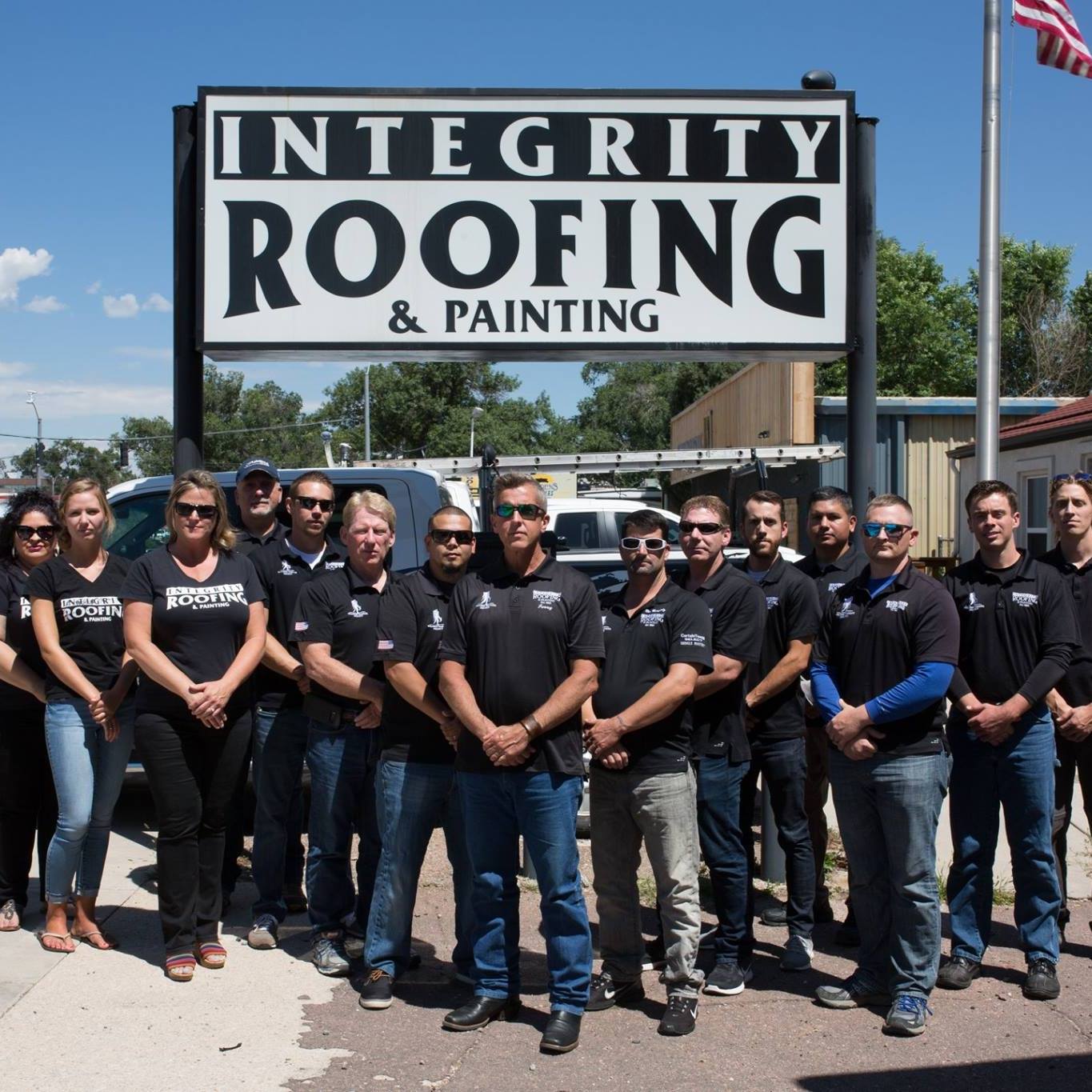
Integrity Roofing and Painting is veteran-owned and family-run since 1990, an Owens Corning Platinum Preferred contractor with 650+ Google reviews and an office on North Union Boulevard. Call (719) 488-2800 and we reach out the same business day.
Sources: PPRBD, Do You Have Roof Damage From a Storm?; PPRBD Reroofing Guidelines, 2021 I-Codes / 2023 PPRBC (rev. 03/05/2024); PPRBD, Hail & Disaster Information; C.R.S. 6-22-103 and 6-22-104 (unofficial reproduction); Colorado Division of Insurance, hail consumer advisory (May 22, 2024).
