
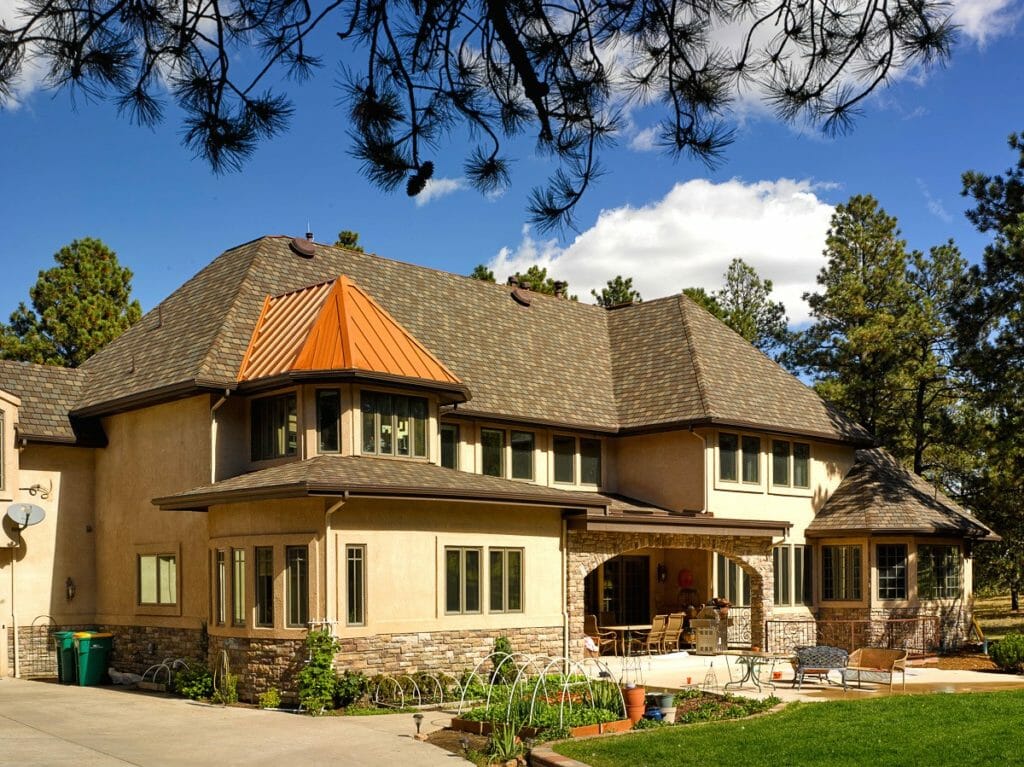
Stucco (cement plaster) cracking ranges from harmless hairline and shrinkage cracks, which even stucco makers say should be expected, to wider, offset or stained cracks that point to building movement or water getting behind the wall. Hairline cracks usually need only a compatible finish. Cracks at window corners with staining below, and stucco buried at the base of the wall, need investigation, flashing repairs and a proper patch. This page is general information; a stucco specialist or engineer should evaluate active or structural cracking.
On this page: Types · Causes · Ground check · Fixes · Basis · When to call
Types of stucco cracks
| Crack | What it looks like | What it usually means |
|---|---|---|
| Hairline or map cracking | Fine random web, like an eggshell | Rapid drying or shrinkage; cosmetic |
| Corner cracks at openings | Diagonal from window and door corners | Stress concentration; common, watch for stains |
| Wide or offset cracks | Visible gap, one side out of plane | Movement in framing or foundation |
| Cracks with stains or efflorescence | Dark streaks or white powder below the crack | Water moving through the wall |
| Base of wall damage | Crumbling or stained stucco near soil or paving | Weep screed buried; water cannot drain out |
Why stucco cracks
Sika’s bulletin lists common causes:
- Thermal expansion and contraction, settling, impact and framing that twists or shrinks as it dries.
- Missing or poorly placed control joints.
- Wood sheathing installed without the required spacing gaps.
- Loading the roof or hanging interior drywall after the stucco is applied.
- Skipping moist curing for the first 48 hours, mix ratios that are off, or finish coats applied before the base coat cures.
Water behind stucco is a separate problem. Building scientist Joseph Lstiburek’s Stucco Woes explains that modern plastic housewraps bond to stucco and block drainage, which is why he recommends a second bond-break layer and a drainage gap of about 3/8 inch.
What to check from the ground
- Photograph each crack with a coin or tape measure for scale and date the photo. Recheck in a few months to see if it grows.
- Look for offset: run a finger across the crack. A step means movement.
- Look below cracks and window corners for dark staining, white powdery efflorescence or bubbling paint.
- At the base of the walls, find the metal weep screed. It should be visible above the soil and paving, not buried.
- Inside, check walls below cracked areas for stains or soft drywall.
The correct fix, and the wrong ones
| Fix | When it fits |
|---|---|
| Leave alone or apply a compatible breathable finish coat | Hairline cracks with no staining. |
| Rout and patch with matching stucco; refinish the panel to the nearest break | Wider cracks that are not moving. |
| Add control joints during reconstruction | Cracks keep returning in large uninterrupted panels. |
| Lower soil and paving to expose the weep screed; fix kickouts and window flashing | Staining at the wall base or below openings. |
| Remove stucco locally, rebuild the weather barrier, flashing and screed | Soft sheathing or rot found behind cracks. |
| Bring in an engineer | Cracks are wide, offset and growing. |
Wrong fixes: caulk over moving cracks, elastomeric paint to “seal” a leaking wall, or patching stucco without fixing the flashing that let water in.
Code and industry basis
- Code. The 2021 IRC, section R703.7.2.1, requires a weep screed at the base of stucco walls at least 4 inches above earth or 2 inches above paved areas. Section R703.7.3 requires two layers of water-resistive barrier over wood sheathing, or one heavier layer separated from the stucco by foam sheathing or a drainage space.
- Sika technical bulletin, Cracks in Cement Plaster. Cracking can occur in any installation; hairline cracks from rapid drying are not a sign of substandard work; Sika does not warrant against cracking and recommends an engineering firm for questions about cracks.
- Northwest Wall and Ceiling Bureau, Painting Stucco. Use breathable coatings designed for stucco; elastomerics can trap moisture and should not be used to fix water intrusion.
- Building Science Corporation, BSI-029 Stucco Woes. Bond-break layer and drainage gap behind stucco.
Stains below a roof-to-wall corner on a stucco house often trace back to missing kickout flashing. For leaks at openings, see window leaks at the install flashing.
When to call
Call when cracks are stained, growing or offset, or when the base of the wall is crumbling. Integrity is a roofing, siding, gutter and painting contractor, not a plaster specialist; we can document stucco cracks during an exterior inspection, fix the roof-side flashing and gutter problems that drive water into stucco walls, and tell you when to bring in a stucco contractor or engineer. See the exterior problems guide.
Book an exterior inspection
Integrity Roofing and Painting is veteran-owned and family-run since 1990, an Owens Corning Platinum Preferred contractor with 650+ Google reviews. Colorado Springs area: call (719) 488-2800 or book a free inspection. Denver metro: call (303) 209-0152 or book a free Denver inspection. Austin: call (512) 610-5897 or book a free Austin inspection. We reply the same business day.
Sources: Sika, Technical Bulletin: Cracks in Cement Plaster (Stucco), rev. 2024; Northwest Wall and Ceiling Bureau, Painting Stucco; Joseph Lstiburek, BSI-029 Stucco Woes: The Perfect Storm; 2021 IRC Chapter 7, sections R703.7.2.1 and R703.7.3 (UpCodes).
