
Key numbers
May is the peak month for U.S. hail loss claims, with 621,945 claims over 2017-2019, followed by June (586,749) (National Insurance Crime Bureau, 2017-2019).
| Up to $33 | Triple-I says every $1 invested in hazard mitigation can save up to $33 in future disaster costs. Source: Insurance Information Institute (Triple-I), 2026 (general statement) |
|---|---|
| $1,569 | The national average U.S. homeowners insurance premium was $1,569 in 2022. Source: Insurance Information Institute (Triple-I), 2022 |
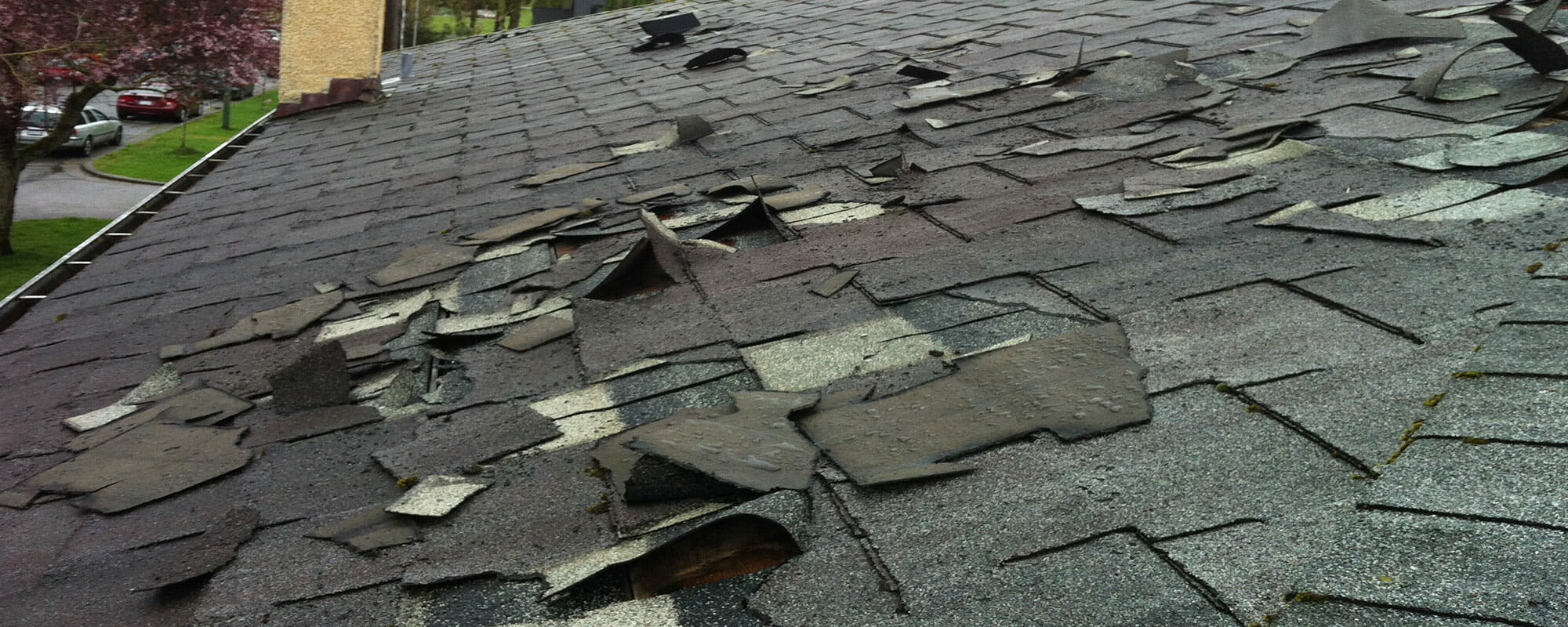
A roof damage insurance claim pays to repair or replace roof damage caused by a covered event, usually hail, wind or a falling tree, minus your deductible. You report the loss to your insurer, an adjuster inspects and writes an estimate, and with replacement cost coverage the money usually comes in two payments: one to start the work and one after it is finished. The claim is always between you and your insurance company. A good roofer’s job is to find and document the damage, make sure nothing gets missed in the scope, and then build the roof to code.
What a roof claim usually covers, and what it does not
Homeowners policies are written to pay for sudden, accidental damage. On a roof that usually means:
- Covered in most policies: hail bruising and fractured shingles, wind-lifted or missing shingles, damage from a falling limb, and the interior water damage that follows if you act quickly.
- Not covered: wear and age, granule loss from sun, poor installation, and damage that grew because nobody protected the roof after the storm. Policies require you to take reasonable steps to prevent more damage, such as a tarp.
- Check the fine print: many policies have a separate wind and hail deductible written as a percentage of your coverage. The Colorado Division of Insurance gives one, two and five percent as examples, so with $400,000 of coverage a two percent deductible is $8,000. Some policies also exclude cosmetic hail damage or pay older roofs at actual cash value only.
If a storm hit and you are not sure whether the damage is worth a claim, have the roof inspected first. A free inspection tells you whether there is damage worth reporting before you open a claim.
Who does what in a roof claim
| Who | Their job in the claim |
|---|---|
| You, the policyholder | Report the loss, protect the roof from further damage, choose your contractor, review the claim summary, and pay your deductible. |
| Your insurance company | Assigns an adjuster, inspects, writes the estimate, pays covered amounts, and explains any denial in writing. |
| Your roofer | Inspects and photographs the damage, writes a scope and a written contract, points out anything the estimate missed, and does the work to code. |
| A public adjuster (optional) | A state-licensed adjuster you hire for a fee to negotiate the claim for you. Not required. |
The line between the roofer and the adjuster matters. Both Colorado and Texas forbid a roofer from acting as your public adjuster. In Colorado a roofer with a signed contract may still discuss the scope of repairs with your insurer (C.R.S. 6-22-105), which is how we make sure nothing gets missed. In Texas, the Department of Insurance lists offering to negotiate a settlement, or telling an insurer the roofer represents you, as improper conduct for a contractor.
State rules that protect you during a roof claim
Colorado (Colorado Springs and the Denver area):
- Your insurer may not require you to use a particular repair business, and must tell you that you may choose any one (C.R.S. 10-4-120). Our guide to choosing your insurer’s roofer or your own explains what that means in practice.
- A roofing contract paid by insurance must be in writing and must say the contractor cannot pay, waive or rebate your deductible (C.R.S. 6-22-103). Read why no roofer can cover your deductible.
- If the insurer denies the claim, you may cancel the roofing contract within 72 hours of receiving the written denial, and the contractor must refund within 10 days (C.R.S. 6-22-104).
- A homeowner policy cannot shorten the time you have to sue your insurer below the statute of limitations (C.R.S. 10-4-110.8).
Texas (Austin and Central Texas):
- A contractor may not offer to waive, rebate or absorb your deductible, and contracts of $1,000 or more involving an insurance settlement must include a notice that you must pay it (Business and Commerce Code 27.02).
- Your insurer has deadlines to acknowledge, decide and pay a claim. Our step-by-step claim guide lists them.
Guides for each step of a roof claim
- Before you file: how long you have to file a hail damage claim and whether to call your insurer or a roofer first.
- Filing: the claim process in order, insurance company claim phone numbers, and how each major insurer handles a home claim, from Farmers to Liberty Mutual.
- The estimate: how to read your claim summary and what your deductible covers.
- Problems: what to do if the adjuster denies roof damage, how insurance appraisal works, and T-lock shingles and denied coverage.
- Getting paid: mortgage company endorsements on insurance checks and the deadline to recover depreciation.
Where Integrity fits
Integrity Roofing and Painting is veteran-owned and family-run since 1990, an Owens Corning Platinum Preferred contractor with 650+ Google reviews, and offices in Colorado Springs, the Denver area and Austin. We inspect for free, photograph what we find, tell you honestly whether you have a claim, and once you hire us, make sure nothing gets missed in the scope. Start with a storm inspection in Colorado Springs, Denver or Austin, or call (719) 488-2800, (303) 209-0152 or (512) 610-5897. Questions we hear often are answered on our roofing and insurance FAQ.
Sources: Colorado Division of Insurance, consumer advisory after the metro Denver hailstorm; C.R.S. 10-4-120, 6-22-103, 6-22-104, 6-22-105, 10-4-110.8 (unofficial reproduction); Texas Department of Insurance, Roofing and insurance: know the law (updated 3/24/2025).
Photos From Our Projects


