
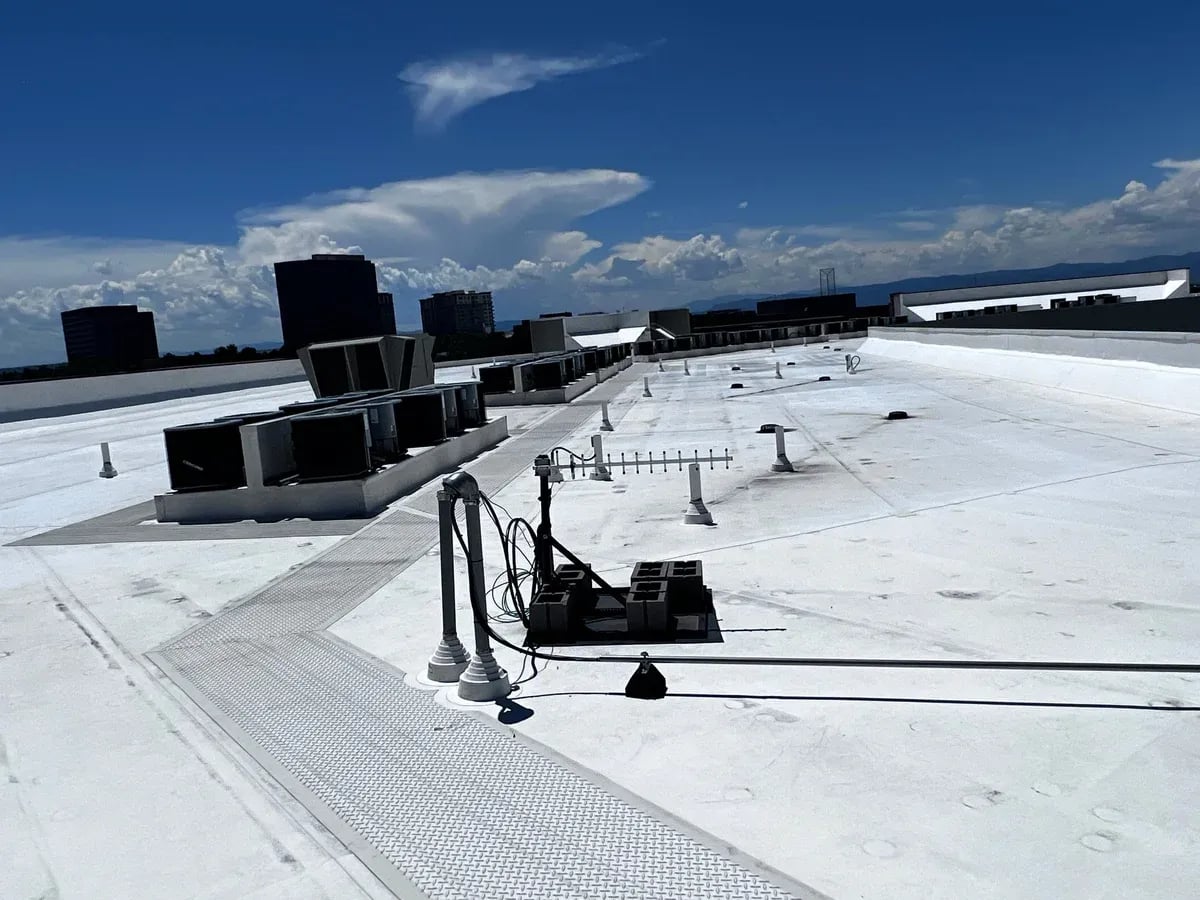
A roof certification is a documented condition inspection of an entire roof, and this one covered a large white TPO membrane on a low-slope commercial building in Greenwood Village in August 2023. The owner paid for the inspection directly. The goal was a clear, photo-backed record of the membrane, its seams and every penetration, not a sales pitch for a new roof.
The problem
Commercial owners usually need a certification for a specific reason: a sale or refinance, a lease handoff, a budgeting cycle, or a question after a storm. The building in the photos has two things that make that record harder to produce: a wide field of membrane and a lot of rooftop equipment. Every unit means a curb, flashing and regular service foot traffic, and every pipe means a boot that has to stay sealed.
Scope
- Roof type: white TPO, a heat-welded thermoplastic single-ply membrane, already in place.
- Slope: low slope. The building code sets a minimum design slope of 1/4 inch per foot for thermoplastic single-ply roofs so water can reach the drains.
- Area: the full roof, every wing and level (second photo).
- Deliverable: a written condition summary with photos, tied to locations on the roof.
The process
- Perimeter first. Edge metal and terminations are where wind gets under a membrane, so we walk the edges before the field.
- Seams. Heat-welded laps are checked along their length for gaps, fishmouths and lifted edges.
- Penetrations. Each pipe boot is checked where the boot meets the membrane (third photo) and at the clamp or seal on top.
- Rooftop units. Curbs, flashing heights and the walk paths that service techs use, since dropped panels and screws are a common source of punctures.
- Drainage. Drains and scuppers are cleared of debris for a look, and the field is checked for ponding that lingers after rain.
- Report. Findings are grouped by urgency, with photos, so the owner can plan repairs and budget rather than react.
Timeline
Contract and inspection in August 2023. A certification is a visit, not a build: the time goes into walking the roof thoroughly and writing it up clearly.
What this project shows about commercial roofs in the Denver area
- Details fail before membranes do. On a healthy TPO roof, most problems found are at boots, curbs and edges.
- Equipment-heavy roofs need a plan. Walk pads and service rules for HVAC contractors protect the membrane between inspections.
- After hail, look closely. Hail can bruise or puncture single-ply roofs in ways that are hard to see from a ladder. A walk of the full roof is the only reliable check.
For membrane options and permits, see commercial roofing in the Denver area. Nearby, our Centennial roofing page covers the southeast metro, and our hail damage repair page explains what we look for after a storm. Browse all recent projects to compare roof types.
Sources: International Code Council, 2021 IBC Chapter 15: Roof Assemblies and Rooftop Structures (Section 1507.13, thermoplastic single-ply roofing).
Photos From This Project


Photos are from this job, edited to remove addresses, faces and license plates. Locations are given by town or area only.
Related Pages
More Projects
- Commercial TPO Roof Replacement in Pueblo, CO (Pueblo, 2024)
- Standing Seam Metal Roof Repair in Franktown, CO (Franktown, 2023)
- Storm Roof Replacement in Lakewood, CO: A 2025 Project (Lakewood, 2025)
Integrity Roofing and Painting is veteran-owned and family-run since 1990, an Owens Corning Platinum Preferred contractor with 650+ Google reviews. Call our Denver office at (303) 209-0152; we respond the same business day.
